

Have you noticed the weather feeling a bit “off” lately? You are not imagining things.
As we move through 2026, the planet is standing at a climatic crossroads. After a brief period of natural cooling (thanks to La Niña), the engines of global warming are revving back up.
Scientists are now warning that a powerful El Niño is brewing. If you thought last summer was hot, you might want to read this.
Here is the current state of our planet, explained without the confusing science jargon.
1. The Big Heat-Up: Why 2026 Feels Different
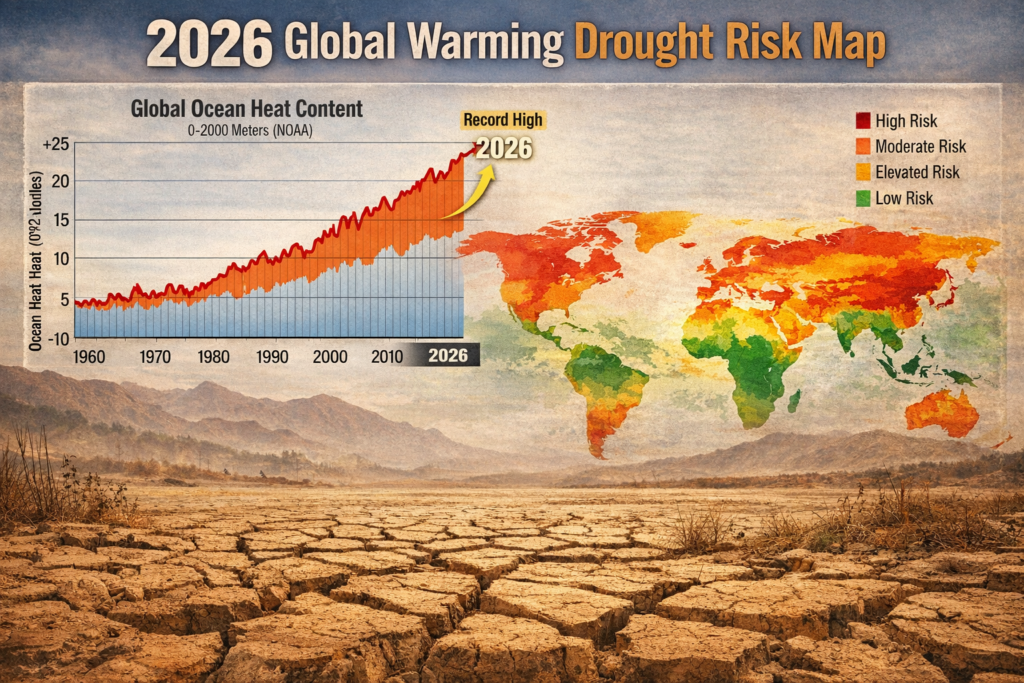
First, let’s look at the scoreboard. The last ten years have been the hottest on record. In fact, 2024 just took the crown as the warmest year ever, hitting 1.55°C above pre-industrial levels.
But here is the scary part: The ocean is running a fever. Oceans absorb 90% of the world’s excess heat. Right now, the rate of ocean warming has doubled in the last 20 years.
Why this matters to you: Hotter oceans mean more fuel for hurricanes, more humidity, and higher sea levels.
2. Goodbye La Niña, Hello El Niño
For the past year, a natural pattern called La Niña has been acting like the planet’s air conditioner—keeping temperatures slightly cooler than they could have been.
That air conditioner is now being turned off.
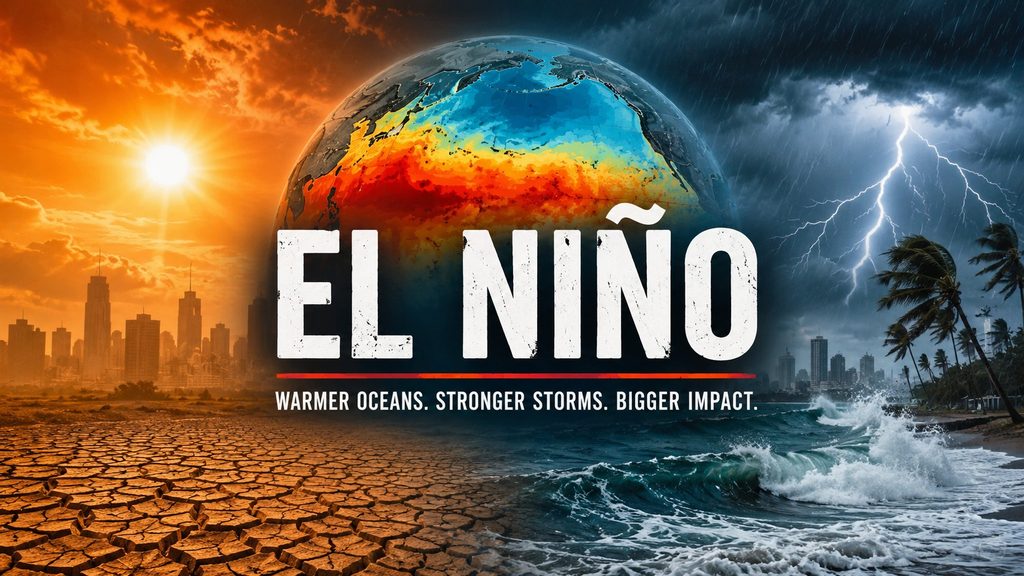
The World Meteorological Organization (WMO) confirms there is a 60%+ chance that we switch to El Niño by late 2026.
Think of El Niño as the “global heater.” When you turn on the heater in a room that is already warming up (global warming), the temperature spikes dramatically.
The Prediction: If this turns into a “Super El Niño,” experts warn that 2026 or 2027 will likely shatter all previous heat records.
3. What Does This Mean for Your Local Weather?
Global trends are interesting, but you probably want to know if you need to buy a bigger umbrella or a stronger air conditioner. Here is the regional breakdown expected for the coming months:
- 🌡️ For Everyone: Expect longer and more intense heatwaves. The entire Northern Hemisphere (USA, Europe, China) has a high probability of “above-normal” temperatures.
- 🔥 Drought Risk: Keep an eye on the Amazon and Indonesia. These regions face a high risk of dryness and wildfires.
- 🌧️ Flood Risk: Conversely, the Horn of Africa and parts of Central Asia should prepare for above-average rainfall and flash flooding.
4. Are We Losing the Fight? (The Good & The Bad)
It is easy to feel hopeless reading this, but the data isn’t all bad. According to the Climate Change Performance Index (CCPI) for 2026:
- The Bad News: Major oil producers are still moving too slowly. The world is not on track to meet the Paris Agreement goals yet.
- The Good News: Renewable energy is growing faster than ever. For the first time, global per capita emissions (emissions per person) are actually starting to fall. We are bending the curve, just not fast enough.
The Bottom Line
We are currently in a brief “calm before the storm.” La Niña is fading, but the underlying fever of global warming remains.
Keep your eyes on the Pacific Ocean. The moment El Niño officially arrives, expect a rapid jump in extreme weather—from scorching heatwaves to sudden floods.
What you can do: Stay weather-aware. If you are in a drought-prone area, start conserving water now. If you are in a flood zone, check your sump pump. And on a global scale? Support clean energy. Every fraction of a degree matters.
✨ Ready to Share Your Story?
Click the button below and start your journey as a Talker today.
Your voice could inspire someone’s next
📌 Key Takeaways (Bullet Points for Skimmers)
- The Trend: Global warming is accelerating, not pausing.
- The Trigger: La Niña is ending; a strong El Niño is likely for late 2026.
- The Risk: 2026 or 2027 will likely become the hottest year ever recorded.
- The Result: Expect extreme swings—droughts in some areas, floods in others.
Do you want to know how these trends will affect your specific state or country? Drop a comment below or check back next week for our regional forecast update.