
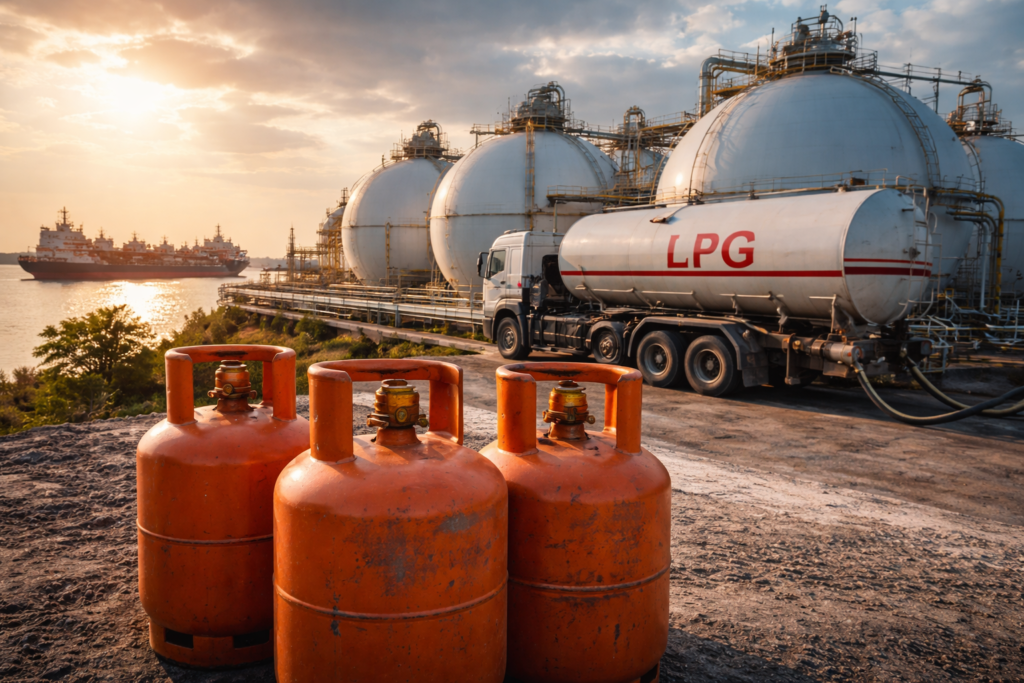

Liquefied Petroleum Gas (LPG) plays an essential role in everyday life around the world. From cooking meals in households to powering restaurants, industries, and vehicles, LPG is one of the most widely used energy sources.
However, in recent years many regions have experienced periodic LPG shortages, creating challenges for households, businesses, and supply networks.
This article explores the global LPG shortage, its causes, how it affects daily life, and what the future might look like for this important fuel.
What Is LPG and Why Is It Important?
Liquefied Petroleum Gas (LPG) is a mixture of hydrocarbon gases, mainly propane and butane, that are stored in liquid form under pressure. It is commonly used for:
- Household cooking
- Water heating
- Small industries
- Restaurants and food businesses
- Agricultural applications
- Transportation fuel in some countries
LPG is popular because it is:
- Efficient and high-energy
- Portable and easy to store
- Cleaner-burning compared to many traditional fuels
For millions of households worldwide, LPG is the primary cooking fuel, making its availability extremely important.
Why the World Is Experiencing LPG Shortages
Several global factors contribute to LPG supply fluctuations. These shortages are usually caused by market dynamics and logistical challenges rather than a single issue.
1. Rising Global Energy Demand
The world’s energy demand continues to grow as populations increase and economies expand.
More households are switching from traditional fuels like wood or coal to LPG because it is cleaner and more efficient. While this transition is beneficial, it also increases demand faster than supply can sometimes keep up.
2. Production and Supply Limitations
LPG is mainly produced during:
- Natural gas processing
- Petroleum refining
Because LPG is a by-product, its production depends on broader oil and gas production levels. When production slows or facilities undergo maintenance, LPG supply can temporarily decrease.
3. Transportation and Distribution Challenges
LPG travels through a complex global supply chain involving:
- Ships
- Storage terminals
- Distribution trucks
- Local supply networks
Any disruption in this chain can delay deliveries. For example:
- Limited shipping capacity
- Port congestion
- Storage limitations
- Weather disruptions
Even small delays can create shortages in certain regions.
4. Seasonal Demand Spikes
Demand for LPG changes throughout the year.
In colder seasons, LPG usage increases because it is used for heating and cooking, which can put additional pressure on supply systems. Sudden spikes in consumption can cause temporary shortages if supply cannot adjust quickly.
The Impact of LPG Shortages on Everyday Life
When LPG supply becomes limited, the effects can be felt across multiple sectors.
1. Households
For many families, LPG is the primary cooking fuel. Shortages may result in:
- Delays in cylinder refills
- Increased fuel prices
- Temporary shifts to alternative fuels
These changes can disrupt daily routines and household budgets.
2. Restaurants and Food Businesses
Food businesses rely heavily on LPG for cooking operations. A shortage can lead to:
- Higher operating costs
- Limited cooking capacity
- Changes in menu pricing
Small restaurants and street food vendors are often the most affected.
3. Small Industries
Many small industries use LPG for heating, drying, and manufacturing processes. Supply interruptions can slow production and increase operational costs.
The Global LPG Supply Chain
Understanding the LPG supply journey helps explain where shortages can occur.
Production
LPG is extracted during natural gas processing and oil refining.
Storage
The gas is stored in specialized tanks at large terminals.
Transportation
LPG is transported globally using specialized cargo ships and regional distribution systems.
Local Distribution
From storage terminals, LPG is delivered to distributors and eventually reaches households through cylinders or pipelines.
Each stage must work efficiently to ensure a stable supply.
Can the World Prevent Future LPG Shortages?
While shortages may still occur occasionally, several improvements can help reduce their impact.
Improved Storage Infrastructure
Increasing storage capacity allows suppliers to maintain reserves that can be used during high demand periods.
More Efficient Distribution Systems
Better logistics planning and advanced supply monitoring systems can help ensure timely deliveries.
Energy Diversification
Using multiple energy sources alongside LPG can reduce dependence on a single fuel type and improve overall energy stability.
Technological Improvements
New technologies in production, transportation, and supply management can make LPG systems more efficient and resilient.
The Future of LPG in Global Energy
LPG continues to play a significant role in the global energy landscape.
While renewable energy sources are expanding, LPG remains an important transition fuel because it burns cleaner than many traditional fuels and is widely accessible.
In many parts of the world, LPG will likely remain a key household and commercial energy source for years to come.
最终想法
The global LPG shortage is a complex issue influenced by demand growth, supply limitations, and logistical challenges. Although shortages can create temporary difficulties for households and businesses, ongoing improvements in infrastructure and distribution systems may help stabilize supply in the future.
Understanding how LPG is produced, distributed, and consumed helps highlight the importance of efficient energy management in a rapidly changing world.
✨ 准备分享 你的故事?
点击下面的按钮,今天就开始你的 Talker 之旅。.
您的声音可能会激励他人的下一个


