
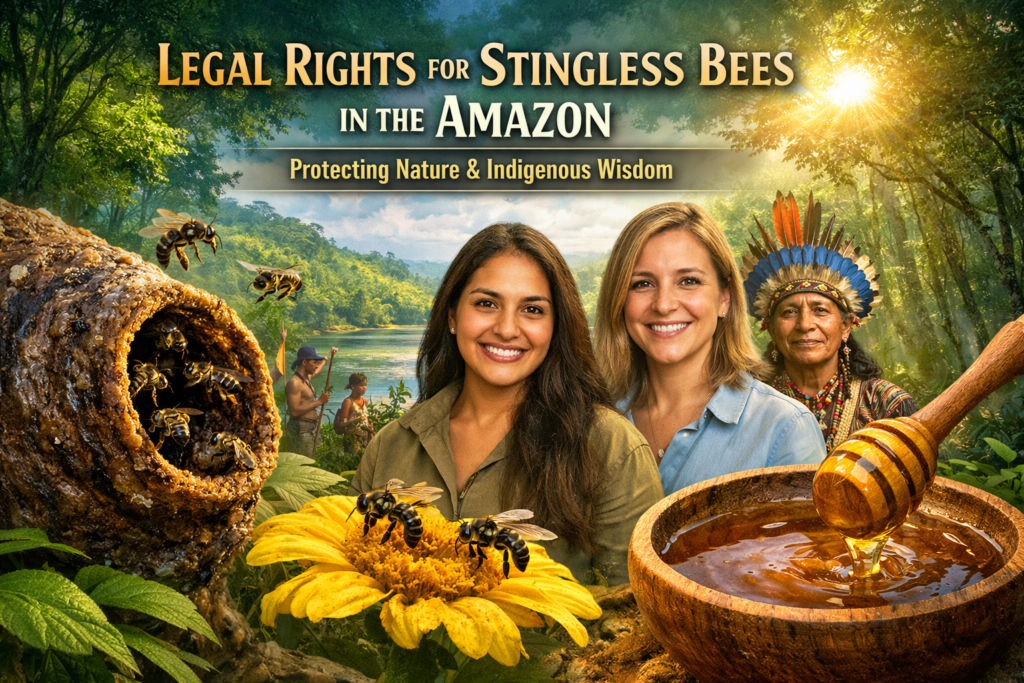

The Amazon rainforest has witnessed a historic moment for nature conservation. Rare stingless bees in the Peruvian Amazon have become some of the first insects in the world to receive legal rights, marking a groundbreaking shift in how humans recognize and protect vital pollinators.
Experts say these bees are essential to keeping Amazon ecosystems alive — and their honey may hold powerful medicinal properties that could help treat multiple diseases.
Why Stingless Bees Matter to the Amazon Ecosystem
Stingless bees are often called the most efficient pollinators in tropical forests. Unlike common honeybees, they are deeply adapted to rainforest ecosystems and play a crucial role in:
- Pollinating native Amazon plants
- Supporting biodiversity and forest regeneration
- Sustaining food systems for wildlife and Indigenous communities
According to scientists, deforestation, climate change, and pesticide use now threaten hundreds of stingless bee species worldwide.
“They are keeping the important ecosystems of the Peruvian Amazon alive and regenerating,” says Rosa Vásquez Espinoza, a leading researcher advocating for their protection.
Peru: A Global Hotspot for Stingless Bees
Globally, scientists have identified around 600 stingless bee species. Peru alone is home to at least 175 species, making it one of the most biodiverse regions on Earth for these insects.
This biodiversity has placed Peru at the center of a growing environmental movement — one that views nature not just as a resource, but as a rights-bearing entity.
Legal Rights for Stingless Bees: A World First
In a landmark step, two regions in Peru have passed ordinances granting legal protections to stingless bees, recognizing their right to exist and thrive. These ordinances are among the first laws in the world to grant legal rights to insects.
The effort is being led by Rosa Vásquez Espinoza, founder of Amazon Research Internacional, in collaboration with Constanza Prieto, Latin American director at the Earth Law Center.
“This ordinance marks a turning point in our relationship with nature,” Prieto explained.
“It recognizes stingless bees as rights-bearing subjects and affirms their essential role in preserving ecosystems.”
Indigenous Knowledge and Cultural Importance
For Indigenous communities, stingless bees are more than pollinators — they are part of ancestral knowledge systems passed down for generations.
Apu Cesar Ramos, president of EcoAshaninka of the Ashaninka Communal Reserve, explains:
“Within the stingless bee lives Indigenous traditional knowledge, passed down since the time of our grandparents.
The stingless bee reflects our coexistence with the rainforest.”
This cultural connection played a key role in pushing local governments to act.
Medicinal Honey With Disease-Fighting Properties
Scientific research is now validating what Indigenous communities have known for centuries: stingless bee honey has remarkable medicinal value.
In a December 2023 study, Espinoza and her colleague Cesar Delgado documented that stingless bee honey has been traditionally used to treat at least 14 diseases.
Laboratory analysis revealed hundreds of bioactive compounds with potential:
- Anti-inflammatory effects
- Antiviral and antibacterial properties
- Antioxidant benefits
- Even possible anti-cancer activity
“I was seeing hundreds of medicinal molecules,” Espinoza said.
“The variety was wild — many with known biological healing properties.”
Government Action and Future Protection
Momentum is growing at the national level. In December 2024, Peru’s Congress approved a bill introduced by María Acuña Peralta to protect stingless bees and promote sustainable beekeeping.
Earlier, Satipo became the first municipality to officially grant legal rights to stingless bees, setting a precedent that could inspire other countries.
A Gentle Revolution for Nature Rights
The legal recognition of stingless bees represents more than insect conservation — it signals a new relationship between humans and nature, where ecosystems are protected not only for their usefulness, but for their inherent right to exist.
As Espinoza wrote in a recent post:
“A gentle revolution is buzzing. Peru could set an example for the world — led by Indigenous communities — showing how nature and humanity can rise together.”
Final Thoughts
The story of stingless bees in the Amazon is a powerful reminder that protecting the smallest creatures can have the greatest impact. By granting legal rights to these essential pollinators, Peru is helping safeguard biodiversity, Indigenous knowledge, and potential medical breakthroughs for generations to come.